
This piece was written by Ian Griffin, one of our friends in the industry. He publishes Booch News and covers kombucha manufacturing, labeling, and market trends - we encourage you to check out him and his publication.
Home brewing is the gold standard for kombucha. It preserves the qualities that makes kombucha unique: living culture diversity, freshness, craftsmanship, and creative freedom. Commercial brands can produce excellent products, but large-scale manufacturing almost always requires compromises that home brewers avoid. A true homebrewed kombucha is usually raw, unfiltered, and alive with a wide spectrum of yeasts and bacteria. Home brewing embraces seasonal variation and individuality, much like artisan sourdough, wine, beer, or farmhouse cider. Many kombucha purists see these natural variations as evidence of authenticity rather than flaws.
Commercial Kombucha
In contrast to homebrew, commercial production requires standardization, distribution resilience, and regulatory compliance, especially regarding alcohol levels. Commercial producers must manage alcohol levels, pegged at 0.5% in the States, slightly higher in some other countries.
Each of these presents unique challenges. Most successful commercial brewers combine traditional fermentation knowledge with modern beverage manufacturing controls. They employ scientific equipment to test everything from pH and Brix levels to microbial analysis of yeasts and bacteria.
As they grow from their homebrew origins, commercial brewers might sell in local farmers' markets, health food stores, cafes, and restaurants. At this stage, consumers are likely to be supportive and forgiving of taste variations from one batch to the next. The distance from ferment to the consumer is short.
However, as they expand into regional and then national brands, scale doesn't just bring more consumers; it brings more scrutiny. A retailer listing kombucha across hundreds of stores isn't just making a flavor decision. They're making a supply chain decision. A compliance decision. A certification decision. That means products that adhere to specifications week in and week out. In terms of production, this requires a mature operational infrastructure to achieve consistency.
The challenges increase as volume mounts. The gap isn't always visible until a retailer asks for missing documentation, a batch fails ABV testing, or a major listing goes to a competitor who can supply high volumes more reliably.
The difference between homebrewed kombucha, made with the basic ingredients of water, sugar, tea, and a SCOBY, and commercial offerings is often stark. Some brands claim to follow the 'traditional' method, indicating that they are unpasteurized, require refrigeration, and may use terms such as 'raw', 'pure', 'unpasteurized', and 'unfiltered' on their labels. Whereas the growth in the market has led to the emergence of other production methods, using techniques not immediately apparent to the consumer.
To produce kombucha at a commercial scale, several challenges must be addressed.
Production at scale
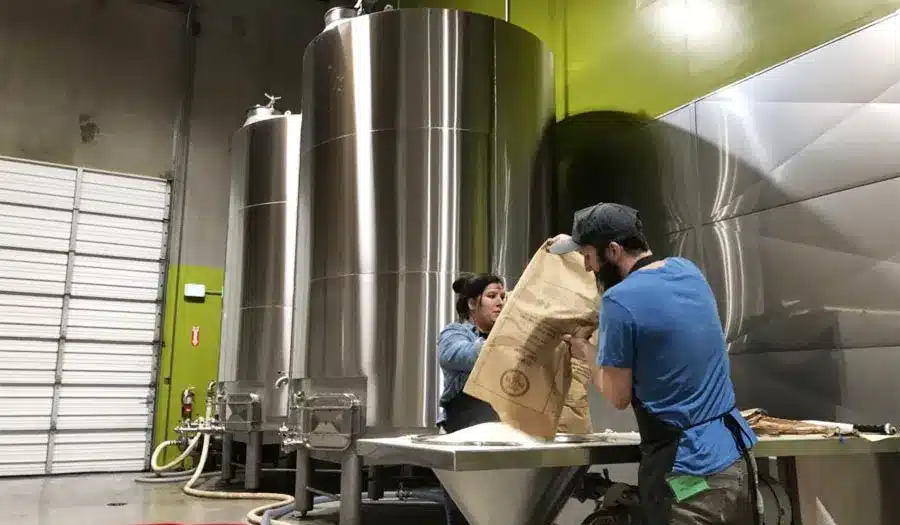
Standardization begins with fermentation. The challenge that commercial brands face in manufacturing and distributing authentic kombucha increases as production scales. Companies can choose to 'scale up' from typical 2-gallon glass ferment jars used by home brewers to ever-larger stainless-steel tanks, such as the giant 12,000-gallon vessels at Aqua ViTea in Middlebury, Vermont.[1] Others opt to 'scale out' by duplicating the glass jars used by home brewers, on an industrial scale. At one point, Health-Ade was reported to have a warehouse with 100,000 2.5-gallon jars! [2] Likewise for market leader GT's:
To this day, GT's kombucha is fermented in 5-gallon small batches, just as one might have centuries ago—and exactly like GT first crafted kombucha in his family home. Only now, instead of a few jars at a time, GT's handcrafts them by the thousands. [3]
Traditional kombucha
Commercial kombucha that requires a cold chain from factory to consumer is considered the most 'authentic' and closest to homemade.
Market-leader GT's is only sold refrigerated:
Keeping the kombucha in its authentic state is the best way to ensure it keeps its benefits. This means kombucha should never be pasteurized, diluted, or filtered. That is why our raw, living kombuchas like SYNERGY Raw Kombucha and CLASSIC Kombucha are never heated or treated and always undiluted and unfiltered. [4]
In countries such as India, cold storage requirements pose significant barriers to scaling. Brands that wish to distribute pan-India often employ processes to make their kombucha shelf-stable at ambient temperatures.
A variety of processes can be employed during and after fermentation to address these storage and distribution challenges.
Processed kombucha
Sterilizing kombucha with heat (pasteurization) or microfiltration removes yeasts and bacteria, preventing further fermentation and the production of alcohol.
Some brands ferment the product for so long that no sugar remains, and they then add sweeteners such as stevia or erythritol to make the drink palatable. Humm Kombucha, in Bend, Oregon, sells a line of Zero Sugar kombucha sweetened with plant-based allulose. [5]
To limit alcohol formation, brands can choose to force carbonate. Without forced carbonation, the secondary fermentation required to naturally carbonate the drink would cause the alcohol level to spike. While homemade kombucha is slightly flat, many commercial ones are quite fizzy because of forced carbonation. This also stuns the remaining yeast in the bottle and can suppress microbial growth.
These processes can extend shelf life by up to a year and make the product more stable — even at ambient conditions. This gives the consumer a far wider choice — not everyone likes the sweet-yet-vinegary taste of traditional kombucha — but the health benefits might not be the same.
Other kombuchas are manufactured with a concentrate or 'instant' mix — essentially, a concentrated tea vinegar, diluted with tea blends, then flavored.
Good Culture supplies a 'base concentrate' that offers:
Standardized, repeatable processes with strict quality controls. Every batch delivers the same flavor profile, alcohol behavior, and functional performance. That removes the guesswork from QC and ensures your production runs to plan every time. [6]
A solution that preserves the authentic base while stripping out all alcohol is Flavourtech's Spinning Cone Column technology [7], developed in Australia for the wine industry. Aqua ViTea is one of a small number of US kombucha producers employing this expensive technology. [1]
Given the wide variety of processes that commercial companies employ, consumers deserve to see what they are buying. Unfortunately, this is not the case.
Labeling
Consumers are often in the dark about what they are drinking. UK citizen-scientist and nutritionist Jo Webster once remarked, “You can actually put drain water in a bottle and sell it as kombucha because there are no standards. Kombucha is not a defined term.” [8]
In an attempt to bring transparency to the industry, the Kombucha Brewers International (KBI) trade association is promoting a Verified Seal Program that recognizes three different production processes [9]:
- Raw (not from concentrate): Freshly fermented and never concentrated, representing traditional raw kombucha.
- Concentrate: Brewed kombucha that is concentrated and reconstituted for shelf stability.
- Pasteurized: Heated to ensure stability while preserving core fermentation characteristics.
KBI founder and past-president Hannah Crum has noted:
There are many in our industry who have a sort of homebrew purist vision of what kombucha is. And when we try to take a homebrew product and scale it to commercial size, that doesn't always work, especially if we're looking for something that's going to be consistent … And so, we need to help educate the public about the benefits of all kombucha because I truly believe that there is a kombucha for everyone. And yes, that means kombucha from concentrate. That means pasteurized kombucha, along with raw, unpasteurized kombucha, or kombucha that is not from concentrate. [10]
Currently, eight brands have adopted the Seal Program, and more are expected to follow.
Future developments
As the industry matures and spreads globally, we can expect more consumers to encounter kombucha. At present, most people have never tasted it. As an alternative to sugar-laden sodas and part of the trend toward a healthy lifestyle, this beverage is destined to become more common. As commercial companies scale to meet rising demand, they will continue to innovate to keep pace. As Hannah Crum says, "There is a kombucha for everyone."
References
[1] Profile: Aqua ViTea, Middlebury, Vermont (Booch News, Oct 12, 2021)
[2] This Local Kombucha Brewery Is Making Millions of Bottles a Month (Los Angeles Magazine, Jul 23, 2018)
[3] The History of Kombucha: Ancient Origins for Healing Today (GT's Kombucha Blog, Jan 23, 2023)
[4] Kombucha for Beginners (GT's Kombucha Blog, Aug 18, 2022)
[6] Good Culture Kombucha, Solutions & Applications
[7] Flavourtech Spinning Cone Column
[8] Citizen Scientists Rate UK Kombucha (Booch News, Jan 28, 2025)
[9] Kombucha Brewers International, Verified Seal Program
[10] The KBI Verified Seal Program, by Hannah Crum (Booch News, May 7, 2024)
Guest contributors on BevWire have explored adjacent ground in The Rise of Low-ABV and Non-Alcoholic Drinks: A Shift Toward Health….