
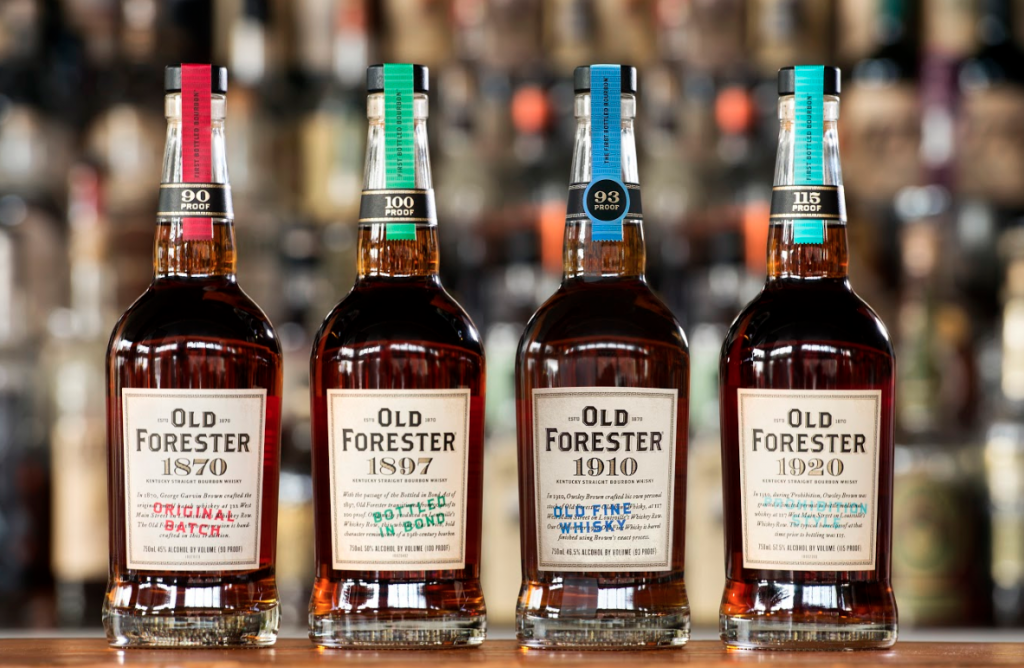

Brown-Forman uses Old Forester to sell more bottles at higher prices. They move fans from the cheap stuff to the Whiskey Row series while using their Louisville distillery to keep the brand story alive. As a shopper, I watch the price on the shelf because it tells me which part of the company's plan I'm paying for.
What business model means here
Most search results point at investor filings about geography and investment. For drinkers, the model is simpler:
- The cheap bottles — Classic Old Forester (86 proof) found in almost every store.
- The expensive bottles — Whiskey Row and limited releases that raise the average price.
- The distillery — The visitor center on Louisville’s Whiskey Row that keeps the history credible.
Jack Daniel’s still makes most of the money for Brown-Forman, but Old Forester is their main tool for growing their share of the high-end bourbon market.
How the model evolved
| Era | What changed | Why it matters on the shelf |
|---|---|---|
| 1870 | George Garvin Brown bottles bourbon in sealed glass | The "first bottled bourbon" story still sells bottles today |
| Prohibition | Medicinal permit; barrel buying from others | This history created the 1920 and 1924 expressions |
| Pre-2010s | Brand was a small player compared to Woodford | It was a cheap heritage bourbon with very little hype |
| 2014–2020 | Whiskey Row series rolls out (1870 to 1920) | This created a permanent set of $45–60 premium bottles |
| 2018 | Whiskey Row distillery opens | You can now tour the facility on Main Street in Louisville |
| 2024+ | 1924 10-year released at $115 | The company is testing how much fans will pay for age statements |
The company has moved Old Forester from a small "emerging" label to a top-15 American whiskey. The goal is to get more households to buy the name, and then get those people to pay more for each bottle.
The four ways Old Forester makes money
1. Standard bourbon in high volume
Classic Old Forester competes with Jim Beam and Evan Williams. The profit per bottle is low, so the company relies on selling as many cases as possible to stay visible to bartenders and new buyers.
2. The Whiskey Row series
Launched in 2014, these bottles use the same basic recipe but change the proof and the process to tell a story:
| Bottle | Theme | Typical Price |
|---|---|---|
| 1870 Original Batch | Early batching | ~$45 |
| 1897 Bottled in Bond | Bonded standards | ~$50 |
| 1910 Old Fine Whisky | Double-barrel finish | ~$55 |
| 1920 Prohibition Style | High proof | ~$60 |
| 1924 (limited) | 10-year age statement | ~$115 |
This is how they make more money from the same liquid. By changing the proof or the barrel finish, they can charge $20 or $30 more than the standard bottle.
3. Tours and the brand home
The Whiskey Row distillery lets the company sell a visit, not just a bottle. Tours and tastings build the kind of brand loyalty that makes a $60 bottle feel like a fair deal.
4. Limited drops and collectors
Birthday Bourbon and other one-off releases keep collectors watching the brand. These small batches let the company test higher prices without risking the sales of their main bottles.
What Brown-Forman controls
What they do themselves: They handle the distilling at their Louisville plant, along with the blending, bottling, and distribution.
What they buy from others: The company has started buying more barrels from outside suppliers instead of making them all in-house. Since barrels provide most of the flavor in bourbon, this shift could change how the whiskey tastes over the next few years.
Sharing costs: Old Forester shares sales teams and trucks with Jack Daniel’s. This keeps their costs lower than a small craft distillery, which is why they can often sell a 6-year-old bourbon for less than a local competitor.
What this means when you buy
My picks:
- For cocktails: Standard Old Forester. It's a great mixer, but don't pay more than $25 for it.
- For sipping: 1910 or 1920. Most fans pick 1920 as the best value because of its high proof.
- The 1924 bottle: It's a good whiskey, but at $115, you're paying a lot for the story. You can find better value in bottles like Knob Creek 12.
Rules for the shelf:
- Do not pay premium prices for the standard black-label bottle.
- Most Whiskey Row bottles don't have an age statement, so you're paying for the process, not the years in the wood.
- If you want a spicy, high-proof bourbon on a budget, try 1792 or 1776 bourbon before spending $60 on 1920.
How Old Forester fits the company plan
Old Forester is how Brown-Forman proves it can take a forgotten brand and make it popular again. By using the same "premium" strategy they used for Woodford Reserve, they've turned their oldest brand into a major source of growth.
FAQ
What is Old Forester's business model?
They sell a lot of affordable bourbon at the bottom and use the Whiskey Row series to move drinkers toward more expensive bottles.
Who owns Old Forester?
Brown-Forman Corporation.
How big is Old Forester?
They sell about 500,000 cases a year, which is more than double what they sold a decade ago.
What is the Whiskey Row series?
A line of higher-priced bourbons themed after dates in the brand's history, typically priced between $45 and $115.
Is Old Forester vertically integrated?
They distill and bottle their own whiskey, but they are buying more of their barrels from outside companies now.
What should a buyer take from the business model?
Match the bottle to how you plan to use it. Use the cheap stuff for mixing and the Whiskey Row bottles for sipping.