
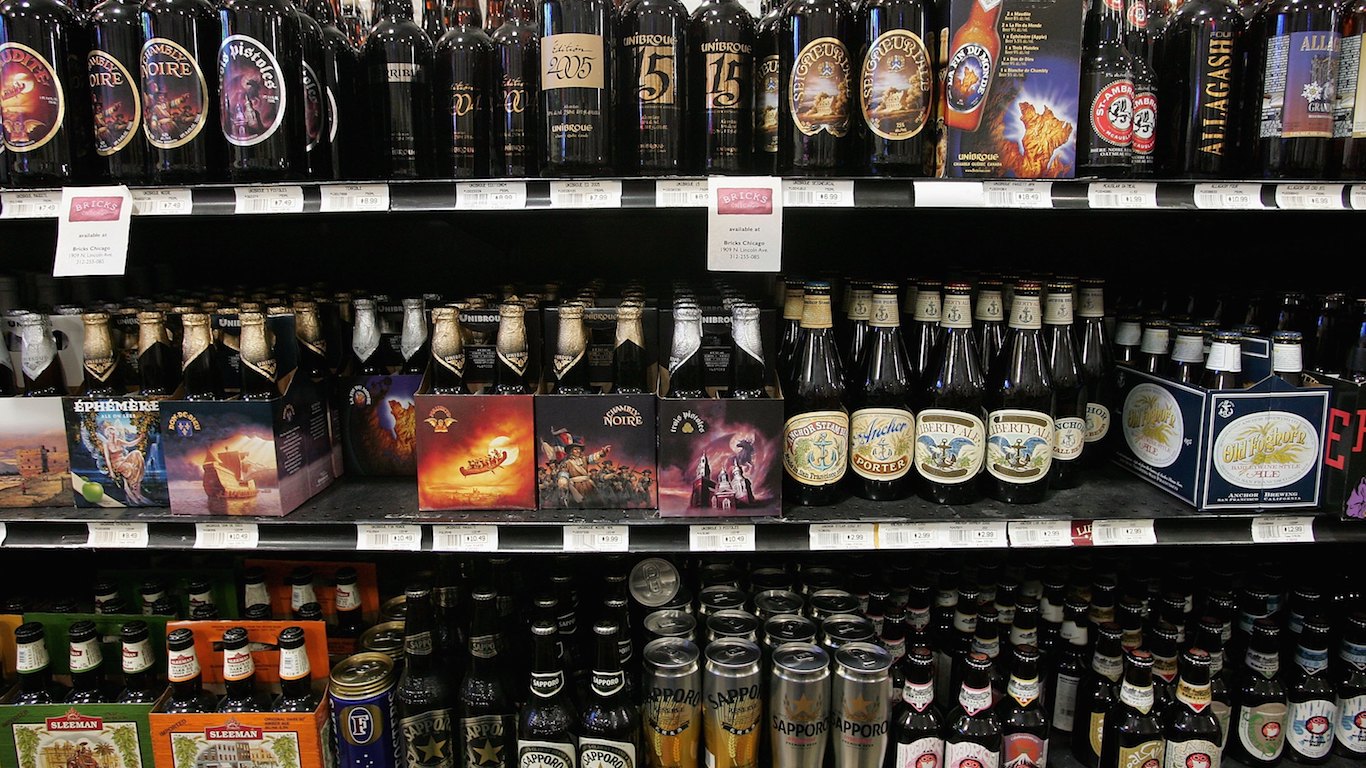

Shelf Beer Is Priced on Borrowed Time. When's the Reset?
Note from Jack Jusko, BevWire founder
I spoke with the owner of a large U.S. brewery about pricing, tariffs, and cost modeling. He asked to stay anonymous. This is a summary of that conversation and the public data I checked afterward.
One takeaway stuck: his company is holding retail prices steady even as margins thin. He’s doing it to keep customers loyal and keep cases moving in a soft market. In his model, they can hold these levels for about a year. After that, the margin on core brands gets too thin to fund promos, packaging, or growth projects. Price increases become a necessity.
That is one operator's internal timeline. Other breweries may move on different schedules. Still, it changed how I read the beer aisle.
You grab the same six-pack you bought last summer. Same endcap. Same case deal. The sticker hasn't moved, which feels like a win when every other grocery bill is climbing. But that pricing is on borrowed time. Breweries are holding the sticker while aluminum, freight, and labor costs pile up. They are eating the difference until the math stops working.
Shelf beer prices in 2026 often stay flat because brewers are absorbing higher costs. Brewing did not get cheap. A reset is coming. The question is whether you notice it on the sticker or in the ounces per can first.
Why he's holding price—and why others might too
On the call, he framed the hold as a trade-off. He’d rather eat margin now than train loyal buyers to shop on price alone. It keeps velocity up while craft beer sales are soft.
Brewers don’t always pass cost increases to the shelf immediately. Three reasons show up in trade reports and lined up with his description.
Customer loyalty. Regular buyers notice when an IPA jumps a dollar. Some breweries would rather run thin than lose a regular. He was explicit about that.
Soft sales. Packaged craft had a rough 2025. Brewers Association data showed craft volume down 6.6% at U.S. retailers, with dollar sales off 5.2% (Brewers Association, 2026). When cases move slowly, a higher sticker is a hard sell to distributors.
Trading down. Macro lagers and value packs are always one aisle over. If a craft six-pack gets too expensive, shoppers walk to a 24-pack of something cheaper.
Government data shows retail beer prices moving slowly even as packaging costs climb. The Bureau of Labor Statistics put beer at home up 2.2% for the year ending April 2026. Alcoholic beverages overall rose 1.9%. Meanwhile, beverage materials—including packaging inputs—rose 5.1% (Bureau of Labor Statistics, 2026).
If your go-to brand hasn't moved in a year, margin is doing the work. You didn't get a secret break on hops.
What costs more underneath the sticker
Most drinkers never see a brewery's cost stack. You see the front of the package. The bill shows up elsewhere.
| Cost layer | Why it hits beer now | What public sources say |
|---|---|---|
| Aluminum cans | Most craft beer ships in cans; tariffs hit sheet metal and containers | Cans were 78% of BA-defined craft packaged volume in 2025 (Brewers Association, 2026) |
| Can supply | Tight capacity raises negotiating pressure even before tariff math | Ball Corporation reported 2026 can production largely sold out (Brewbound, 2026) |
| Section 232 tariffs | Import duties on aluminum stay in place and feed the Midwest Premium | Trade groups describe continued pressure on cans, kegs, and equipment (Brewers Association, 2026) |
| Hops, malt, freight | Commodity and logistics costs move independently of shelf stickers | About 40% of craft barley comes from Canada; trade focus is on keeping that route stable (Brewbound, 2026) |
Aluminum is the biggest factor. Cans dominate craft packaging, and trade groups say metal costs remain high. The Can Manufacturers Institute expects more price increases this year than last, with the "Midwest Premium" passing $1 per pound (Packaging Dive, 2026). Crown and Ball executives told investors tariff costs will keep flowing through the chain (Packaging Dive, 2026).
Brewers Association CEO Bart Watson called aluminum tariffs "sticky" and said relief is unlikely soon (Brewbound, 2026). That matches what the brewer told me: costs are real, relief is uncertain, and holding price means eating the difference.
Checking his timeline against public data
His 12-month runway is specific to his brewery. Others may move faster. A smaller brewery without his scale may have raised prices already. A macro brand with national leverage plays a different game. Molson Coors flags commodity inflation and tariffs as risks that push suppliers to seek price increases (Molson Coors Beverage Company, 2025).
Most pints still turn a profit. But the cushion between the cost and the sticker is slim. Some large producers are spending that cushion on purpose to keep customers—including the company on the other end of my call.
Are beer prices artificially low right now?
For some brands, yes. Call it delayed inflation. Breweries are timing when you feel the hit.
Wine drinkers learned this faster. Tariffs on imported wine hit shelf tags in weeks because duties land at the border and multiply through the chain (BevWire, 2026). Domestic beer takes the slow road: hold the sticker, eat margin, or cut SKUs before the jump.
The result is uneven. A 12-pack at a grocery store might stay flat while a taproom nudges prices. Canned brands feel aluminum tariffs immediately. Draft-heavy locals feel keg steel and labor first. A stable sticker often means the owner is buying time.
What to watch for in the next 12 months
You won't get a press release titled "Margin Ran Out." You get smaller signals.
Quiet downsizing. Same price, fewer ounces. Brands hope you notice the art before the weight line.
Fewer seasonals. When margin tightens, slow sellers disappear. Core brands stay; experiments wait.
Taproom-only releases. Pours at the bar have better margins. If canned beer becomes a loss leader, check the tap list.
Shallower promos. The $10-off case disappears. The "low price" stays on the tag, but the deep discounts vanish.
Check the packaging date and the price per ounce. A fresh pack at the old price is a deal. A stale pack is a warning.
Pick a brand you buy often. Write down the price and the ounces. Check again in 90 days. If the sticker holds but the ounces drop, the reset already started.
When's the reset?
The reset is happening on different schedules. The pattern is clear. Cans and materials cost more. Retail prices are lagging. Craft volume is down. The brewer I spoke with has a one-year runway. Others are on different clocks. They face the same pressure.
The reset is real. You’ll catch it on the shelf tag, in the shrink ray on the can, or when your favorite brand simply disappears.
References
- Brewers Association. (2026). Restructured aluminum tariffs continue to pressure craft brewers. https://www.brewersassociation.org/government-affairs-updates/restructured-aluminum-tariffs-continue-pressure-craft-brewers/
- Brewbound. (2026, March 12). Cans 78% BA-defined craft in 2025, share growth slowing. https://www.brewbound.com/news/cans-78-ba-defined-craft-in-2025-share-growth-slowing
- Brewbound. (2026). BA tariffs webinar recap: 'Sticky' aluminum tariffs, consumer sentiment a 'dumpster fire' and other challenges ahead. https://www.brewbound.com/news/ba-tariffs-webinar-recap-sticky-aluminum-tariffs-consumer-sentiment-a-dumpster-fire-and-other-challenges-ahead/
- Bureau of Labor Statistics. (2026, April). Consumer price index—April 2026 [Table 1, beer, ale, and other malt beverages at home; nonalcoholic beverages and beverage materials]. U.S. Department of Labor. https://www.bls.gov/news.release/pdf/cpi.pdf
- Molson Coors Beverage Company. (2025). Annual report on Form 10-K for the fiscal year ended December 31, 2024. https://s27.q4cdn.com/826627388/files/doc_financials/2024/ar/Molson-Coors-10-K-2024.pdf
- Packaging Dive. (2026). High Midwest Premium, ongoing tariffs, Iran conflict hit aluminum. https://www.packagingdive.com/news/aluminum-steel-tinplate-tariffs-midwest-premium-2026/813711/