
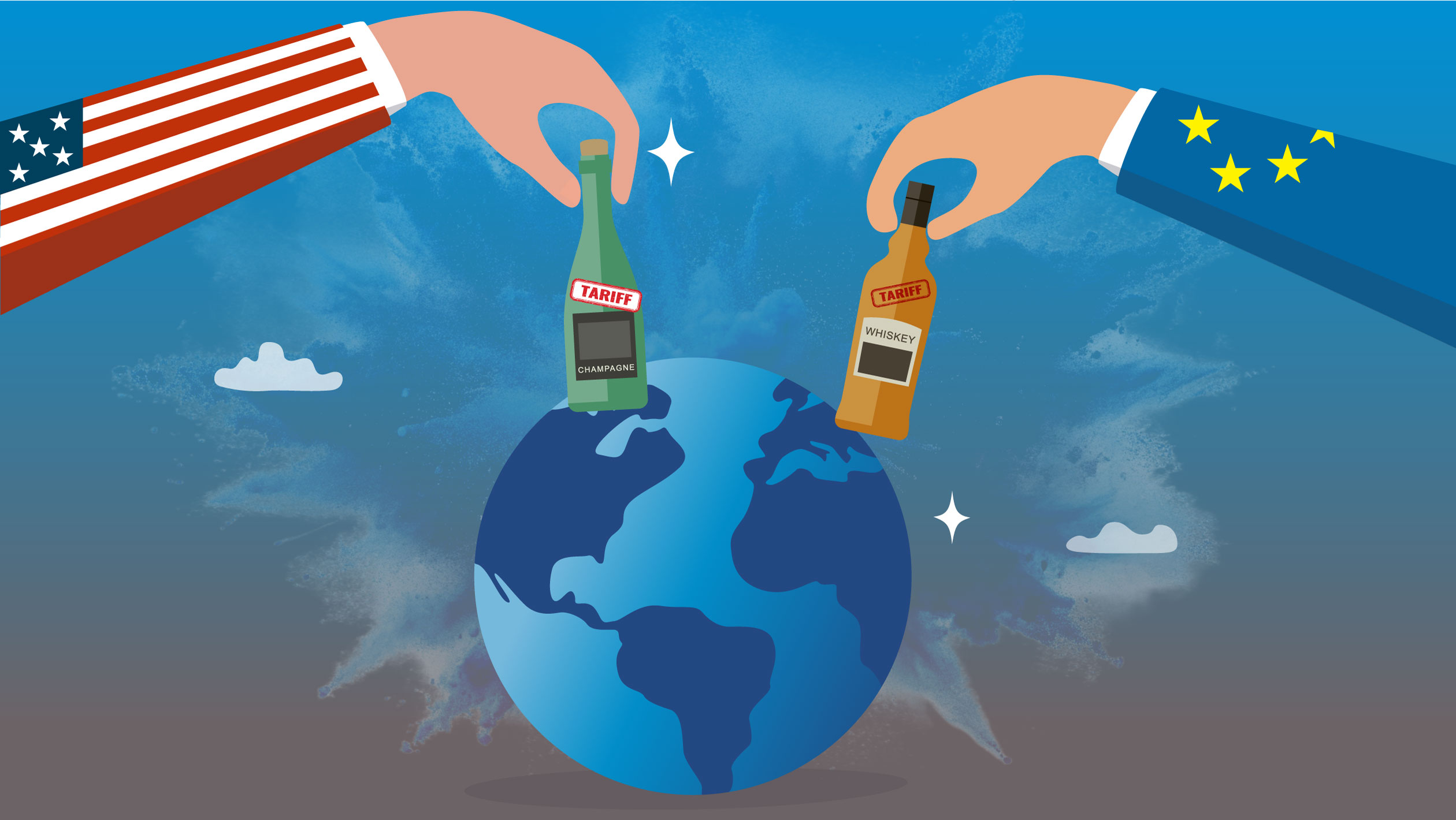

1. The Hook: The Great Shelf Shock of 2026
If you have walked into a wine shop lately and wondered why the European section feels oddly expensive, you are in crowded company. People keep calling it shelf shock in 2026 because the sticker keeps moving while the wine inside the bottle is still the same Tuesday pour you remember. The twenty-five dollar Sancerre that used to feel like a modest splurge for a team dinner now lands closer to what you would pay a decent divorce attorney for an hour, and that jump did not arrive because the vintage suddenly doubled in quality. Sometimes those wines are simply gone from the shelf while lawyers argue over chapters of trade code that have almost nothing to do with soil or sun.
The mess comes from a bruising legal fight layered on top of distribution habits, not from one bad harvest. In February 2026 the Supreme Court struck down tariffs that had lived under the International Emergency Economic Powers Act, which for a week or two felt like someone had opened a window in a hot room. A few days later the geopolitical hangover arrived in the form of new surcharges under Section 122 of the Trade Act of 1974. By May 7 the Court of International Trade called those duties invalid while Customs kept collecting money pending appeal, so invoices and nerves both stayed messy while everyone waited on the next filing.
What follows is a plain walk through that shuffle, from how a border charge turns into shelf price, to where buyers are actually pouring when they still want the flavors they remember from France without paying strictly for paperwork. Terroir still matters in the glass, but the fine print on the invoice has started to matter almost as much when you are trying to stay inside a budget.
2. The $1.50 Tariff That Costs You $8 (The Multiplier Effect)
Ten or fifteen percent on a customs form reads small until you remember that wine in the United States still runs importer, then distributor, then retailer, and each layer usually takes a percentage on the landed cost underneath it. Because each tier applies its own percentage-based markup, often somewhere in the twenty-five to fifty percent range, the border tax gets echoed before anyone pulls a cork, which is why people in the trade shorthand the whole thing as a multiplier instead of a single line item.
Here is the bookkeeping version people call the Multiplier Effect formula:
C_r = (W_v \times (1 + T)) \times (1 + M_i) \times (1 + M_d) \times (1 + M_r)
C_r: Terminal retail cost
W_v: Wholesale value
T: Tariff rate
M_i: Importer markup
M_d: Distributor markup
M_r: Retailer markup
With that structure in mind, a dollar-fifty at the port often lands as three to eight dollars where you actually swipe the card. That is how you get the fifteen-to-fifty dollar Danger Zone, where the tariff’s absolute dollar bite is big enough to hurt, and the wine is still the kind of bottle you buy for a normal weeknight, so the price jump lands in the part of your budget where you actually notice it. In that band the purchase stops feeling like a fair swap for the work that paid for it, and starts feeling closer to sending money toward a policy fight you did not sign up for at the register—exactly where our cheap wines that taste expensive hunt for categories that still overperform the sticker.
Consequently, consumers often pay more in absolute dollar terms than the tariff itself collects for the treasury, and that pattern turns the local wine shop into an accidental tax office.
3. The 2026 Economic Architecture: A Timeline of Chaos
The first half of 2026 stacked enough reversals to dizzy anyone who reads dockets for breakfast. The spine of the story is still Learning Resources v. Trump, where the Supreme Court challenged the executive branch’s habit of leaning on emergency powers to tax what lands on the dinner table.
2026 Wine Trade Volatility Timeline
| Date | Event | Practical Impact on Consumers |
|---|---|---|
| Feb 20, 2026 | Learning Resources v. Trump | SCOTUS strikes down 15–25% IEEPA tariffs; initial hope for price relief. |
| Feb 24, 2026 | Section 122 Implementation | 10% global surcharge applied; prices stabilize at a new, higher floor. |
| May 7, 2026 | CIT Ruling on Sec 122 | Proclamation 11012 declared invalid; CBP continues collection pending appeal. |
| July 24, 2026 | The 150-Day Clock | Statutory limit for Section 122 ends; a potential "cliff-edge" for prices if not extended. |
July 24 is the date that sounds boring until you remember Section 122 only gets about a hundred fifty days by statute, which leaves the market on something like a price cliff while Congress decides whether to extend the tool or let it lapse. If Congress does not extend the measure you could see European invoices snap back toward something calmer, but until that vote happens the smart retail money keeps sliding south where the trade story is a little less tangled.
4. The Mercosur Era: Why Argentina and Uruguay are the New "Safe Harbors"
On May 1, 2026 the provisional application of the EU-Mercosur Partnership Agreement shifted how the southern hemisphere sits inside global trade conversations. The agreement ties up about seven hundred million people in one trading conversation, which gives participating countries a little more breathing room than the North Atlantic is getting while the tariff headlines keep cycling.
Argentina has used that window to keep climbing out of the old cheap Malbec box and into high-altitude wines that read with more line and tension. In the Uco Valley and Patagonia you can taste wines built for mineral drive and structure that remind you of Burgundy or Bordeaux on the pleasure side of the comparison, while the invoice side still looks kinder than it does on blue-chip French names that picked up the full tariff stack.
- Icon Value: The 100-point Catena Zapata Adrianna Malbec remains the gold standard for collectors.
- Precision Whites: The 97-point Chacra Chardonnay from Patagonia is 2026’s most credible alternative to high-end Meursault.
- Best Buy Winners: For the daily drinker, the Altos Las Hormigas Tinto (9–13) and La Mascota 'Unanime' (20–22) offer "Danger Zone" complexity at pre-war prices.
Uruguay stays the regional wild card with a maritime lean on the classics. Their coastal Albariño reads saline and fresh in the same register as Spanish Galicia when you are thinking about what to pour with shellfish, and modern Tannat from producers like Bodega Garzón has traded some of the old rustic tannic bite for silk and purity in a way that makes blind pours easier at the table.
5. The Zero-Tariff Shield: South Africa’s Strategic Advantage
For the European-based drinker or the collector who chases value across borders, South Africa still works as a hedge because the SADC Economic Partnership Agreement keeps South African wine on duty-free, quota-free terms in the major partner markets the piece cares about. The May 1 deal with China that granted South African wine fully duty-free access adds another pool of capital and attention on top of what was already a busy Chenin Blanc conversation in the trade press.
The quality argument is already sitting in the record books, not only in tasting-room gossip. The 2026 Platter’s SA Wine Guide recorded unprecedented scores for the country's flagship varieties.
- The Renaissance Peak: The 2024 Botanica Mary Delany Chenin Blanc and the 2022 Leeuwenkuil Heritage Syrah both secured 99-point ratings, signaling the Cape’s arrival as a peer to the Northern Rhône and the Loire.
- The Global Benchmark: The Ken Forrester Old Vine Reserve Chenin Blanc remains the most reliable value play in the 15–18 range.
If you are visiting rather than importing, a structured day of wine tasting in Cape Town through the Stellenbosch and Franschhoek routes is still the fastest way to taste why those Platter numbers landed where they did.
6. The Strategic Sensory Map: Drinking Like a Frenchman (Without the Price)
When you read a wine list in 2026, the left-hand column still lists countries, but the useful move is to chase the cut and weight you want in the glass, then hunt for a New World line that has not picked up the same ten percent surcharge story as the marquee European name—the same habit The Sommelier’s Secret walks through when swapping Sancerre for saline whites without a lecture at the table. Everyone keeps calling that habit strategic sensory alignment, and the phrase is a little stiff, yet it describes what sommelier friends actually do when they swap Leyda for Sancerre without making a speech about politics at the table.
The 2026 Substitution Guide: Counter-Tariff Classics
| If You Love (European Appellation) | Try This (Non-European Variety/Region) | Why it Works (Sensory Match) |
|---|---|---|
| Sancerre | Leyda Valley Sauvignon Blanc (Chile) | Saline, citrus-driven, high-acid mineral style. |
| Chablis | Elgin Chardonnay (South Africa) | Unoaked, mineral tension, cool-climate freshness. |
| Red Burgundy | Central Otago Pinot Noir (NZ) | Bright, energetic, earthy complexity and structure. |
| Northern Rhône | Eden Valley Syrah (Australia) | Cracked black pepper, savory profile, violet aromatics. |
| Saint-Émilion | Patagonia Merlot (Argentina) | Plush red fruit, structured elegance, cooler-climate acidity. |
7. The Glass Ceiling: Why "Buying American" Doesn't Save You
The Buy American instinct makes emotional sense, yet a global supply chain means domestic wine rarely dodges the same cost currents. U.S. wineries still bump into what the piece calls a glass ceiling built from indirect tariffs on the stuff that does not show up in tasting notes.
- The Bottle Crisis: 70% of glass bottles used by U.S. wineries are imported. Chinese glass currently carries a 20% tariff, while European glass is hit with a 15% surcharge.
- The Barrel Tax: Between French oak barrels and Portuguese corks, the "ancillary" trade war adds roughly $1 per bottle to the production cost of even the most patriotic Napa Cabernet.
8. Conclusion: The New Viticultural Compass
The wine world has tilted hard enough that a lot of the serious hunting for quality per dollar has moved toward the Southern Hemisphere. Buyers who live with spreadsheets next to their corkscrews have started treating SADC EPA or Mercosur language on the back label as a quiet signal that the bottle picked up fewer parallel surcharges on the way in, which is a nerdy detail until you are the one paying the tab.
As July gets closer and this tariff chapter either ends or gets replaced, I find myself reaching for bottles that threaded the messiest compliance story of the year and still taste like wine when we sit down, even when the capsule does not carry the most famous name in the book.
Works cited
- Learning Resources, Inc. v. Trump, Supreme Court of the United States, Feb. 20, 2026 (IEEPA tariff authority).
- Trade Act of 1974, 19 U.S.C. § 2132 et seq. (Section 122 emergency import surcharges); Presidential Proclamation 11012 and implementing Federal Register notices, Feb. 24, 2026.
- U.S. Court of International Trade, Section 122 / Proclamation 11012 litigation, decision of May 7, 2026 (invalidity; collection pending appeal).
- European Commission, EU–Mercosur Partnership Agreement, provisional application effective May 1, 2026.
- Southern African Development Community (SADC) Economic Partnership Agreement, Annexes on trade in goods (South African wine, duty- and quota-free treatment in partner markets).
- People’s Republic of China–South Africa joint trade communiqué and tariff schedule adjustments, May 1, 2026 (100% duty-free access for South African wine).
- Platter’s South African Wine Guide 2026 (Johannesburg: John Platter SA Wine Guide (Pty) Ltd., 2026), scores for Botanica Mary Delany Chenin Blanc 2024 and Leeuwenkuil Heritage Syrah 2022.
- U.S. Alcohol and Tobacco Tax and Trade Bureau, Industry Circulars and import compliance guidance (wine, three-tier distribution, customs bond).
- U.S. Customs and Border Protection, Chapter 99 tariff treatment and liquidation procedures for wine imports.