

Claus Preisinger is often the first name natural wine drinkers learn when they look toward Austria. If you have spent time in a specialty wine shop, you have likely seen the bottles: one is a tall, slender Alsace-style bottle with a label wrapped high around the neck; the others are minimalist white squares bearing nothing but a handwritten signature.
Based in Gols, on the north shore of Lake Neusiedl in Burgenland, Preisinger has been producing wine under his own name since 2002. He converted to biodynamics in 2006 and is a member of the prestigious Pannobile association. His work is defined by a "low-tech, instinctive" approach that has made him a widely recognized producer in the European natural wine scene.
However, for a first-time buyer, the portfolio can be confusing. Some bottles are designed for a party and meant to be served ice-cold; others are serious, contemplative wines aged in clay amphorae that benefit from decanting. Picking the wrong one is a common reason drinkers either find natural wine too "funky" or, conversely, too demanding.
Sixty-second producer facts
Claus Preisinger grew up in Eisenstadt and trained at the viticultural school in Klosterneuburg before working harvests in California. He spent three years as an assistant to Hans Nittnaus—one of the pioneers of organic winemaking in Burgenland—before founding his own winery.
- The Estate: He farms roughly 20 hectares across 60 micro-parcels. This fragmentation allows him to work with a diverse range of soil types, from the limestone and slate of the Leithaberg to the gravelly soils of the Heideboden.
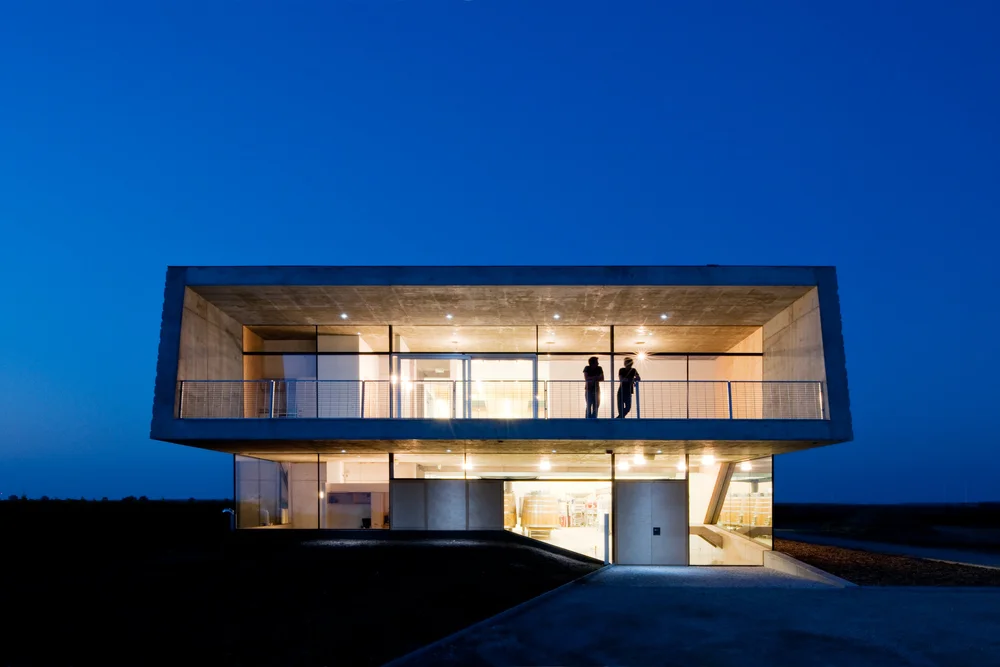
- The Cellar: Built in 2009, his futuristic winery is designed for minimal movement of the wine. He uses amphorae, concrete eggs, and large-format oak barrels.
- The Philosophy: No cultured yeasts, no fining, and no filtration. While he is not dogmatic about "zero sulfur," many of his cuvées see no sulfur additions at all. He links his ability to skip sulfur to early harvesting, which preserves high acidity and keeps the wines stable.
The Pannobile context
To understand Preisinger, you have to understand Gols and the Pannobile association. Founded in 1994, Pannobile is a group of nine winemakers in Gols who committed to producing wines that express the unique character of their home. Members include names like Judith Beck and Gernot Heinrich.
Preisinger became the youngest member of the group at age 24. The association is not just a marketing collective; it is a technical exchange. Members taste each other's wines and share insights on biodynamics and soil health. For a bottle to carry the "Pannobile" name, it must be approved by the other members as a true expression of the Gols terroir.
Decoding the labels: A family guide
Preisinger's lineup is structured into distinct tiers. Understanding the label usually tells you exactly how to serve the wine.
| Family | Example cuvées | What it signals | Typical serve |
|---|---|---|---|
| Libre / Fun | Puszta Libre!, Puszta Blanca!, Rozsa Libre!, DOPE. | Glou-glou style: high energy, low tannin, meant for immediate joy. | Chilled (often 10–12°C / 50–54°F). |
| Signature White | KalkundKiesel, ErDELuftGRAsundreBEN (Grüner/Weißburgunder), Heideboden | Terroir-forward: textured, often cloudy, focused on soil and mineral. | Cool cellar temp; decant if it feels "tight." |
| Signature Red | Zweigelt Kieselstein, Blaufränkisch Kalkstein, Heideboden | Site-specific: purity of fruit combined with mineral structure. | Slight chill or cellar temp. |
| Prestige / Association | Pannobile, Pinot Noir, Bonsai | Top-tier: age-worthy, complex, often the result of his oldest vines. | Cellar temp; give it air. |
Which bottle to buy first?
If you are standing in front of a shelf and see three different Preisinger bottles, here is the roadmap for choosing your path.
Path A: The "Safe" First Buy (Puszta Libre!)
If you want to understand why Preisinger is famous, start with Puszta Libre!. It is a blend of Zweigelt and St. Laurent (recent vintages often include 20% Pinot Noir) that pays homage to the quaffable red wines of Beaujolais. Recent releases like the 2023 vintage have featured a 60% Zweigelt, 20% St. Laurent, and 20% Pinot Noir split.
The bottle itself is a tribute to his father, who used similar Alsace-style bottles with high neck labels. Trade tastings and retail notes frequently describe this wine as "pure, chillable joy." It is produced using carbonic maceration, which results in a wine that is bright with cherry and cranberry notes and carries very low tannin. It often has a slight, refreshing spritz upon opening.
The label explicitly says "Gekühlt Servieren!" (Serve Chilled). This is not a wine for a heavy steak dinner; it is a wine for a park, a pizza, or a Tuesday night. It is the ultimate "glou-glou" (gulp-gulp) wine—easy to drink, unpretentious, and vibrant.
Path B: The Serious White (KalkundKiesel or ErDELuft...)
If you prefer white wine and want to see what "minimal intervention" looks like when it is executed with precision, look for KalkundKiesel (Chalk and Pebble). It is a blend of Pinot Blanc, Grüner Veltliner, and Chardonnay. It is textured and slightly cloudy, offering a savory, mineral profile rather than a tropical fruit bomb.
For a deeper dive, the ErDELuftGRAsundreBEN series (the name translates to Earth, Air, Grass, and Vines) focuses on specific sites. These are often aged in 1000-liter amphorae. Preisinger was a pioneer of the amphora movement in Austria, seeing the clay vessels as a way to reduce the wine to its essential elements—the grape and the soil—without the flavor influence of oak. The Grüner Veltliner from this series is known for its pear and citrus fruit backed by a distinct peppery, savory twist.
Path C: The Natural Wine Veteran (Pinot Noir or Pannobile)
For those already comfortable with the "zero/zero" style, Preisinger’s Pinot Noir is a standout. He picks early—sometimes as early as mid-August—to maintain freshness. The wine is often whole-bunch fermented in amphora. It rivals Burgundy in its elegance but carries the distinct, wild energy of Burgenland natural wine.
Alternatively, the Pannobile red blend is his contribution to the local winemaking association. It is a more structured, traditional representation of the region’s best red grapes, though still made with his signature hands-off approach. It is a wine that demands contemplation and, ideally, a few years of aging.
Path D: The Rosé Mood (DOPE.)
If you are looking for something pink and playful, DOPE. is a zero-sulfur rosé made from Blaufränkisch. It is fruity, low in tannin, and low in acidity, living up to its name with a cool, relaxed style. Like the Libre line, it is best served well-chilled.
The importance of soil and micro-parcels
Preisinger's decision to farm 60 micro-parcels is not just an administrative challenge; it is a deliberate strategy to capture the diversity of the Burgenland landscape.
- The Leithaberg: On the west side of the lake, the soils are dominated by limestone and slate. This is where he sources the grapes for his most mineral-driven whites, like the ErDELuft series. The limestone provides a sharp, clean acidity, while the slate adds a smoky, flinty dimension.
- The Heideboden: On the east side, the soils are flatter and gravelly. This area produces wines with more generous fruit and softer structures, such as the Kieselstein (Pebble) Zweigelt.
- The Gols Slopes: The vineyards immediately surrounding the town of Gols are where many of his most balanced, age-worthy reds are grown.
By blending grapes from these different sites, or bottling them separately as single-vineyard expressions, Preisinger creates a portfolio that is a liquid map of the region.
What "natural" means in the Preisinger cellar
Preisinger is often quoted saying, "When everything comes straight from the vineyard, there is nothing to do in the cellar." This philosophy is backed by Respekt Biodyn certification, which is one of the strictest biodynamic standards in Europe.
His move toward low or zero sulfur was driven by a personal hypersensitivity; he found that high-sulfur wines gave him headaches. By focusing on soil health and picking grapes while they still have high natural acidity, he creates an environment where the wine can protect itself without chemical additions.
A note on bottle variation: Because these wines are unfined and unfiltered, you may see some sediment at the bottom of the bottle. This is normal. You may also notice that the wine changes significantly after being open for an hour. Natural wines are "living" products; they react to oxygen and temperature more dynamically than conventional, stabilized wines.
Serving and storing
- Temperature is key: Do not be afraid to put his red wines (especially the Libre line) in the fridge for 30 minutes before opening. The brightness of the fruit is amplified when the wine is cool.
- Decanting: While "glou-glou" wines like Puszta Libre are meant to be popped and poured, his signature white labels often benefit from 20–30 minutes of air to let the reductive "matchstick" or "flinty" aromas dissipate.
- Storage: Because these wines have little to no added sulfur, they are more sensitive to heat. Store them in a cool, dark place. If you don't finish a bottle, put the cork back in and keep it in the fridge; most will hold up well for 24–48 hours.
Internal links and further reading
If you are exploring the world of low-intervention wine, you may also find these guides helpful:
- What Is Orange Wine and Why Is It Popular? – Many of Preisinger's whites use the skin-contact techniques discussed here.
- What Is the Best Wine for Beginners? – See where Austrian reds fit into the broader landscape of easy-entry styles.
Sources: Fact-checking and sensory descriptions synthesized from Wineanorak, The Wine Distribution Co., Volker Wine Co., and Geraldine's Natural Wines.