
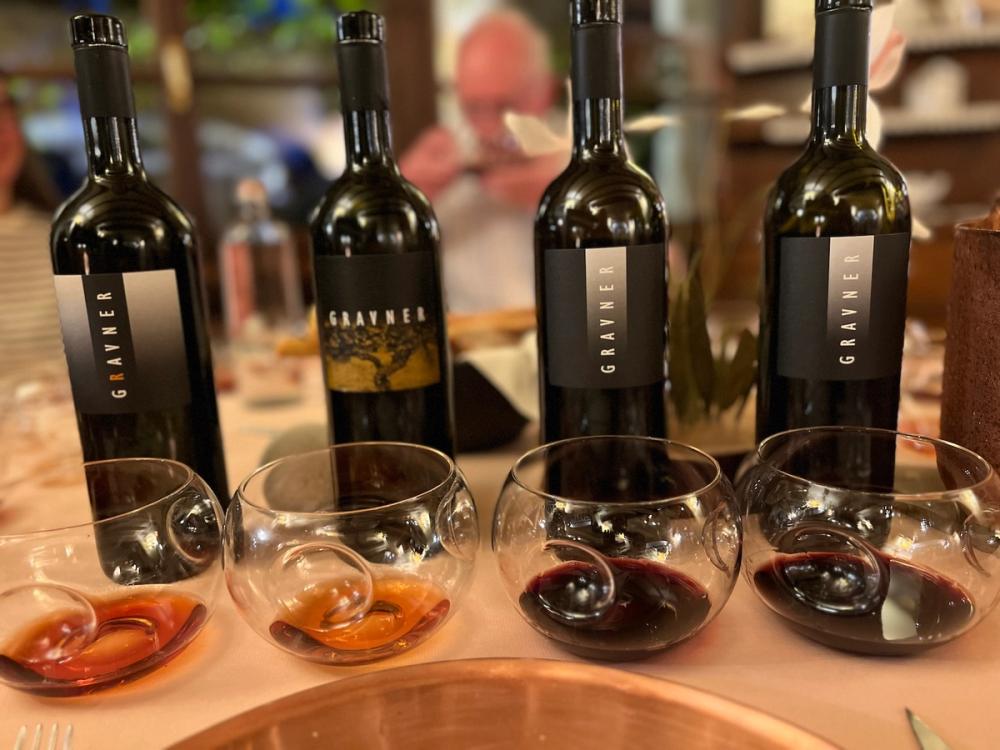

If you spend time in specialty wine shops or follow the "natural" wine world, you eventually hit the name Gravner. It usually comes up when someone is talking about orange wine, amphorae, or the hills of Friuli on the Italian-Slovenian border. It also comes up when you look at the price tag. A bottle of Gravner Ribolla Gialla typically costs between $110 and $175 at US retail.
For that price, you aren't getting a standard fresh white wine. You are getting a bottle that spent half a year fermenting on its skins in a buried clay jar and another six years aging in a cellar before the winery even considered selling it. Josko Gravner, the man behind the estate, is often called the father of the modern orange wine guide movement. He prefers the term "amber wine," a nod to the ancient traditions of Georgia where he sources his vessels.
This guide explains who Josko Gravner is, how he makes these wines, and why they take seven years to reach your glass. Most importantly, it helps you decide if your first bottle of Gravner is a smart buy or if you should start your orange wine journey somewhere else.
Sixty-second producer facts
The Gravner estate is a small family operation with a long history and a very specific focus.
- The History: The Gravner family has farmed in Oslavia since 1901. Josko took over the cellar in the early 1970s.
- The Location: Oslavia is a small hamlet in the Collio region of Friuli-Venezia Giulia, Italy. The vineyards sit on steep hills of marl and sandstone, right on the border with Slovenia.
- The Grapes: Josko once grew many varieties, including Chardonnay and Sauvignon Blanc. In the mid-2000s, he ripped them all out. Now he only grows two indigenous grapes: Ribolla Gialla for white (amber) wine and Pignolo for red.
- The Scale: The estate covers about 18 hectares. They produce roughly 22,000 to 30,000 bottles a year. For context, a large commercial winery might produce that many bottles in a single afternoon.
- The Importer: In the United States, Gravner is represented by Rosenthal Wine Merchants, a name associated with traditional, terroir-focused European estates.
The Oslavia region: A border town with unique soil
To understand the wine, you have to understand where it grows. Oslavia is a place of dramatic history and specific geology.
The hills here are made of a soil called ponca (or flysch). It is a layered mix of marl (clayey limestone) and sandstone. This soil is poor in nutrients but high in minerals. This forces the vine roots to go deep into the earth. Mineral depth is a hallmark of the wines from this area.
Oslavia also sits in a unique climatic pocket. It is caught between the cold winds of the Julian Alps to the north and the warm breezes of the Adriatic Sea to the south. This temperature swing helps the grapes develop complex aromatic profiles. They maintain high acidity.
The history of the land is just as layered as the soil. For centuries, this region was part of the Austro-Hungarian Empire. After World War I, it became part of Italy. After World War II, the border between Italy and Yugoslavia was drawn right through the middle of the hills. Today, the Gravner family farms vineyards on both sides of the border—some in Italy and some in Slovenia (where the region is called Brda). This cross-border identity is common in Oslavia, where many families speak both Italian and Slovenian.
Why Gravner matters: The rejection of the "modern" way
To understand why people pay $150 for a bottle of Ribolla, you have to understand Josko Gravner’s rejection of modern winemaking.
In the 1980s, Josko was a successful "modernist." He used stainless steel tanks, cultured yeasts, and small French oak barrels (barriques) to make clean, technically perfect wines. He won awards and his wines sold well. But after a trip to California in 1987, he became disillusioned. He saw a wine industry that relied on additives and technology to create a consistent product, but he felt those wines lacked character and a connection to the land.
He began a slow retreat from technology. He stopped using chemicals in the vineyard. He moved away from small oak barrels. Then, in 1996, a massive hailstorm destroyed nearly his entire crop. With the 5% of grapes that remained, he decided to experiment. He left the white Ribolla Gialla grapes on their skins to ferment, just as his grandfather had done.
The result was a cloudy, tannic, amber-colored wine that shocked the Italian wine establishment. Josko didn't stop there. He traveled to Georgia, the country widely considered the birthplace of wine, to study their 8,000-year-old traditions. He began importing "qvevri"—massive clay jars lined with beeswax—and burying them in his cellar floor. By 2001, he was fermenting his entire harvest in these vessels.
His work in Oslavia sparked a global interest in skin-contact white wines. Today, thousands of winemakers around the world make orange wine, but Gravner remains the reference point for the style.
Biodiversity: The vineyard as an ecosystem
Josko’s philosophy extends far beyond the cellar. He views his vineyards as a living system, not just a place to grow grapes.
While many commercial vineyards are "monocultures"—rows of vines and nothing else—the Gravner estate is a mix of life. Josko has planted hundreds of trees among the vines, including apricot, cherry, olive, and cypress. He has also built ponds to attract birds and insects.
He believes that a healthy, biodiverse environment makes the vines more resilient to disease. If the ecosystem is in balance, he doesn't need to use synthetic pesticides or fertilizers. This approach is labor-intensive and reduces the amount of space available for vines, but for Josko, it is the only way to produce grapes that truly reflect the land.
How Gravner wine is made: The physics of the qvevri
The defining characteristic of a Gravner wine is time. While most white wines are bottled and sold within a year of harvest, a bottle of Gravner stays in the cellar for at least seven years.
The role of the qvevri
Josko uses 47 buried Georgian qvevri. He believes clay is the most neutral material for fermentation, allowing the grape and the soil to speak without the flavor influence of wood or the "coldness" of steel.
He buries the jars to keep the fermentation temperature steady. It is a functional choice, though it looks dramatic. The earth acts as a natural insulator. It keeps the fermentation at a steady, cool temperature without electric cooling systems.
Each jar is lined with a thin layer of beeswax. This seals the porous clay just enough to prevent the wine from leaking, but still allows a tiny amount of oxygen to interact with the wine. This slow, controlled oxidation is what helps the wine develop its complex, nutty flavors.
The production timeline
The process is slow and follows a strict rhythm. Here is how the two main wines move through the cellar.
| Stage | Ribolla Gialla (Amber) | Rosso Breg (Red) |
|---|---|---|
| Fermentation | 5–6 months in buried qvevri | 5 weeks in large oak tini |
| Skin Contact | Full duration of fermentation | ~1 month |
| Oak Aging | ~6 years in large Slavonian oak botti | ~5 years in large Slavonian oak botti |
| Bottle Hold | ~1 year before release | ~1 year before release |
| Total Time | 7+ years | 7+ years |
The white grapes are crushed and put into the jars with their skins. They ferment spontaneously with wild yeasts. The jars are sealed, and the wine stays on the skins for up to six months. This long maceration extracts the amber color and the tannins that give the wine its structure.
After the skins are pressed off, the wine goes back into the qvevri for several months to settle. Then, it moves to large, neutral Slavonian oak casks (botti) for six years. These casks are old and don't add "oaky" flavors like vanilla or toast. Instead, they allow the wine to breathe and stabilize slowly over time.
Finally, the wine is bottled without fining or filtration. Josko adds only a tiny amount of sulfur at bottling to ensure the wine survives the trip to the customer.
The grapes: Ribolla Gialla and Pignolo
Josko’s decision to focus only on two grapes was a radical move in a region that had embraced international varieties like Merlot and Chardonnay.
Ribolla Gialla: The thick-skinned survivor
Ribolla Gialla is the soul of the estate. It is an ancient grape that has grown in these hills for at least 700 years. It is a difficult grape to grow; it is picky about where it sits and it can be prone to uneven ripening.
However, it has one feature that makes it perfect for Josko’s style: very thick skins. These skins are packed with the tannins and aromatic compounds that define the wine. When you ferment Ribolla Gialla without the skins (as a standard white wine), it can be simple and neutral. But when you leave it on the skins for six months, it reveals a massive range of flavors—from dried fruits to savory herbs.
Pignolo: The "spoiled child" of Friuli
If Ribolla is difficult, Pignolo is nearly impossible. The name comes from the Italian word for "fussy" or "picky." It produces very small yields and the tannins can be incredibly harsh if not handled with extreme patience.
In the mid-20th century, Pignolo was nearly extinct. A few winemakers in Friuli, including Josko, worked to bring it back. Because the tannins are so strong, the wine requires years of aging to soften. This is why Josko’s red wine, Rosso Breg, stays in the cellar for just as long as his white wine. When it finally matures, it is one of the most powerful and long-lived red wines in Italy.
The lineup decoded
The Gravner portfolio is small and focused. Because Josko ripped out his international varieties years ago, the current releases are limited to a few labels.
| Wine | Style | Grapes | What to expect |
|---|---|---|---|
| Ribolla Gialla | Amber | 100% Ribolla Gialla | The flagship. This is the wine that made him famous. It is intense, structured, and built for long aging. |
| Ribolla Riserva | Amber | 100% Ribolla Gialla | A selection of the best fruit, aged even longer. It is only released in magnums (1.5L bottles). |
| Rosso Breg | Red | 100% Pignolo | A rare, powerful red wine. Pignolo is a local grape known for high tannins and deep fruit. |
| 8.9.10 | Sweet Amber | Ribolla Gialla | A rare blend of three vintages (2008, 2009, 2010) where the grapes were affected by botrytis (noble rot). |
Note: You may still see bottles of "Breg Bianco" in the market. This was a blend of Chardonnay, Sauvignon Blanc, Pinot Grigio, and Riesling Italico. Josko stopped making it after the 2012 vintage when he decided to focus only on indigenous grapes.
Vintage variation and the role of botrytis
Josko does not believe in a "house style" that stays the same every year. He wants the wine to reflect the specific weather of the vintage.
In some years, the vineyards are affected by botrytis cinerea, also known as "noble rot." This is a fungus that shrivels the grapes and concentrates their sugars and flavors. In most dry winemaking, botrytis is seen as a flaw. But Josko embraces it. He believes it adds a layer of complexity—notes of honey, saffron, and dried mushrooms—that you cannot get any other way.
This means that a bottle of Gravner from 2011 might taste very different from a bottle from 2016. For collectors, this variation is part of the appeal. It makes every bottle a unique record of a specific year in Oslavia.
What it tastes like—and who it’s for
A glass of Gravner Ribolla Gialla is a sensory experience that can be confusing if you are expecting a standard white wine.
The sensory profile
The color is a deep, brilliant amber or copper, often with an orange hue. Standard white wine tones like pale straw or gold are absent here.
- Aromas: You might find notes of dried apricot, orange zest, beeswax, dried flowers, hazelnut, and a hint of smoke or earth. It does not smell like fresh fruit.
- Palate: It has tannin, the grippy sensation you usually find in red wine. It is full-bodied. It has high acidity and a long, savory finish. It often has a salty, mineral quality.
Is it for you?
Gravner is a serious wine. It is built for contemplation and heavy meals rather than a casual afternoon by the pool. It is for people who enjoy complexity, texture, and wines that evolve in the glass.
It is also a challenging wine. Some people find the tannins and the dried-fruit flavors to be too much. If you prefer crisp, fruity, light-bodied white wines like Pinot Grigio or Sauvignon Blanc, Gravner will be a shock.
However, if you enjoy orange wines, craft beers like lambics, or complex sherries, Gravner is the ultimate expression of the craft.
Gravner vs Radikon
You cannot talk about Gravner without mentioning his neighbor, Stanko Radikon (and now his son, Sasa). The two families are friends and both are leaders in the Oslavia orange wine scene.
While they share a philosophy of skin contact and minimal intervention, the wines are different. Radikon wines are often described as more "wild," exuberant, and sometimes more volatile. Gravner wines are often seen as more "monastic," structured, and precise. Gravner uses clay qvevri for fermentation; Radikon uses large oak vats. Both are world-class, but Gravner is generally the more expensive and sought-after of the two.
Which bottle to buy first
If you are ready to spend the money, here is the roadmap for your first purchase.
Path A: The curious beginner
If you have never had an orange wine before, do not buy Gravner yet. It is too expensive and too intense for a first try. You might spend $150 and decide you hate the style.
Instead, look for a more accessible skin-contact wine. Producers like Meinklang (Austria), Claus Preisinger (Austria), or even some domestic US producers like Field Recordings make "entry-level" orange wines for $25–$40. These will give you a sense of the style without the massive financial commitment.
Path B: The committed enthusiast
If you know you like orange wine and want to experience the benchmark, buy the Gravner Ribolla Gialla. Look for the current release (as of 2026, this is likely the 2016 or 2017 vintage).
Expect to pay between $115 and $150. This is the wine that defines the estate and the region. It is the most consistent way to understand Josko’s vision.
Path C: The red wine lover
If you primarily drink red wine and want to see how Josko handles a red grape, look for Rosso Breg. It is made from the Pignolo grape. It is a massive, tannic, and deeply complex red wine that can age for decades. It is rarer than the Ribolla, so it may be harder to find.
Serving and storing
Because these wines are made with minimal intervention and long aging, they require specific care to show their best.
- Temperature: Do not serve Gravner ice-cold. If it is too cold, the aromas will be muted and the tannins will feel harsh. Aim for "cellar temperature," roughly 15°C (59°F). Take it out of the fridge 20–30 minutes before serving.
- Decanting: This is mandatory. These wines have been in a bottle for a year and a cellar for six. They need air to "wake up." Many enthusiasts argue that Gravner is actually better on the second or third day after opening. Use a wide decanter and give it at least an hour.
- Glassware: Use a large red wine glass (like a Burgundy or Bordeaux glass). The wide bowl helps the complex aromas develop.
- Food Pairing: These are "food wines." They have the structure to stand up to heavy, savory dishes. Think of roasted poultry, mushroom risotto, aged cheeses, or even iron-rich foods like duck or squab. They also pair remarkably well with fermented foods like kimchi or sauerkraut.
- Storage: Because they have very low sulfur, they are sensitive to heat. Store them in a cool, dark place. Once opened, the wine is quite stable due to its tannin and acidity; it will easily last 3–5 days in the fridge with a cork in it.
FAQ
What is Gravner wine?
Gravner is an estate in Friuli, Italy, owned by Josko Gravner. It is famous for producing "amber" or orange wines using ancient techniques, including fermentation in buried clay jars (qvevri) and long aging in oak.
Is Gravner orange wine?
Yes, though Josko Gravner prefers the term "amber wine." It is made from white grapes (Ribolla Gialla) that are fermented with their skins, which is the definition of orange wine.
Why is Gravner so expensive?
The price reflects the labor and time required. The wines are aged for seven years before release, meaning the winery has to pay for seven years of storage and insurance before seeing any revenue. The yields in the vineyard are also very low, and the process is entirely manual.
What grape is Gravner Ribolla?
It is 100% Ribolla Gialla, an indigenous grape of the Friuli and Slovenia region. It has thick skins, which makes it perfect for long skin-contact fermentation.
Gravner vs Radikon—which should I try first?
Both are excellent. Radikon is often slightly more affordable and "wilder." Gravner is more expensive, more structured, and considered the ultimate benchmark. If you want the "original" modern orange wine experience, start with Gravner Ribolla.
How long does Gravner age before release?
A minimum of seven years. This typically includes six months in qvevri, six years in large oak casks, and one year in the bottle.
Sources:
- Rosenthal Wine Merchants: Gravner Producer Profile
- Grape Collective: "Another Way is Possible: Joško Gravner and the Never-Ending Quest for Improvement" (Interview with Mateja Gravner)
- Opening a Bottle: "Essential Winemakers of Italy: Gravner" by Kevin Day
- Decanter: "Producer Profile: Gravner" by Tom Cannavan
- The Buyer: "I am curious orange – inside the magical world of Joško Gravner" by Peter Dean