
The U.S. government’s 2025–2030 Dietary Guidelines, released January 7, 2026, changed the alcohol line to a short instruction: “Consume less alcohol for better overall health.” The new document does not repeat the old numeric daily limit. For beverage businesses, that makes the wording notable—but it does not create a new serving-size definition or tell a bar how much is in a pour. USDA’s release and the guidelines themselves make the update clear.
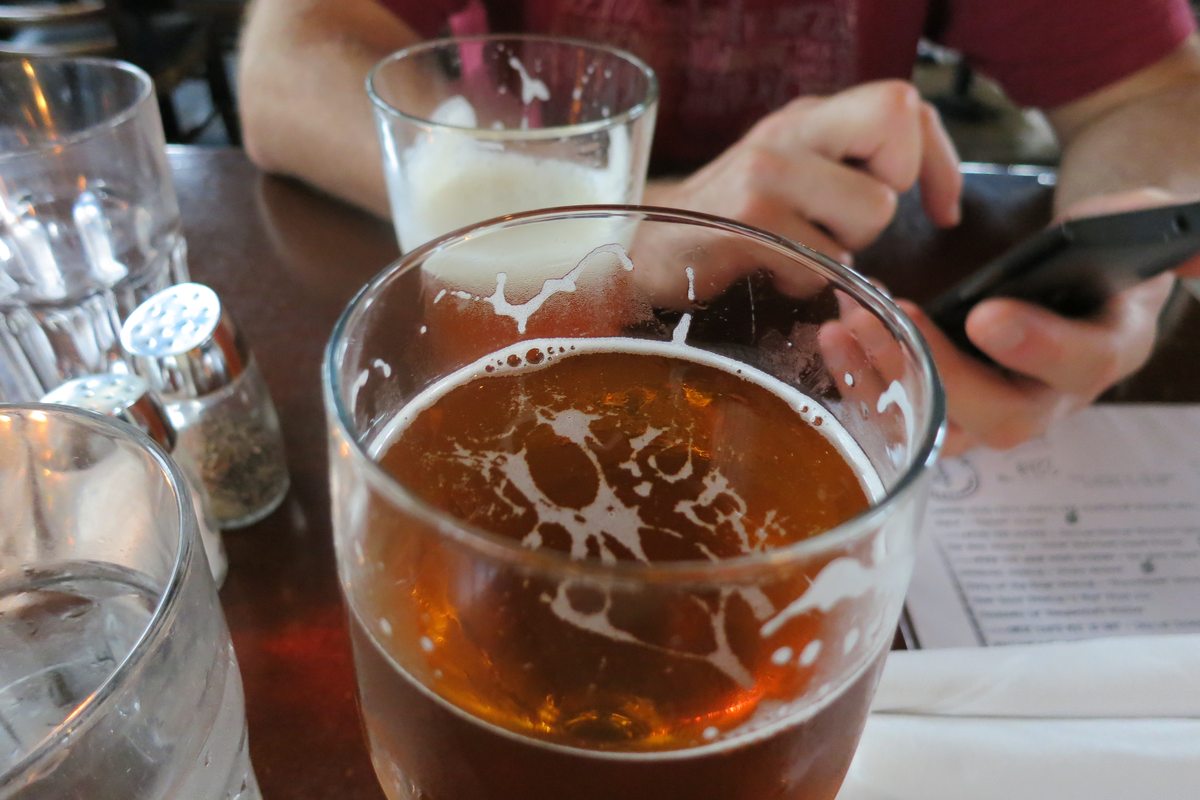
One practical number remains useful when talking about beer: the CDC defines a U.S. standard drink as 0.6 fluid ounces (14 grams) of pure alcohol. Its reference example is 12 ounces of 5% beer. By the same arithmetic, a 16-ounce beer at 5% ABV contains 0.8 fluid ounces of pure alcohol, or roughly 1.33 standard drinks (0.8 ÷ 0.6). This is a serving calculation, not a health recommendation. CDC’s standard-drink guide lists beer, wine, malt liquor and spirits examples.
| Serving | Approx. pure alcohol | CDC standard-drink equivalent |
|---|---|---|
| 12 oz beer at 5% ABV | 0.60 fl oz | 1.00 |
| 16 oz beer at 5% ABV | 0.80 fl oz | 1.33 |
| 12 oz beer at 7% ABV | 0.84 fl oz | 1.40 |
Calculation: fluid ounces × ABV as a decimal; divide the result by 0.6 fl oz per CDC standard drink. Rounded to two decimals where useful.
What changed in the federal wording?
The older guidelines included a numeric line for adults who choose to drink. The 2025–2030 document instead says to consume less alcohol for better overall health and identifies people who should completely avoid alcohol, including people who are pregnant, recovering from alcohol use disorder, unable to control the amount they drink, or taking medications or living with conditions that can interact with alcohol. The federal document is dietary guidance; the page does not set a pint size or a retail labeling rule.
That wording arrives while drinking remains part of a changing consumer conversation. Gallup’s 2026 Consumption Habits survey found that 54% of U.S. adults said they drink alcohol, matching its reported low from 2025 and the lowest level in its trend since 1939. That poll is context, not proof that the guideline update caused a change in purchases or drinking.
Why a pint is not a standard-drink synonym
“Pint” describes volume; standard drinks estimate pure alcohol. Those are different measures. The CDC’s 12-ounce, 5% beer example contains about the same pure alcohol as 5 ounces of 12% wine or 1.5 ounces of 40% spirits. A larger or stronger beer changes the calculation even if a menu still calls it one pour.
For a taproom or beverage list, the useful editorial move is plain labeling: state the serving volume and ABV where customers can see them, and avoid implying that every glass represents one standard drink. A 16-ounce 5% pour is about one-third more than the CDC’s standard-drink beer example; a higher-ABV pour carries more still. That arithmetic helps explain a menu. It is not a substitute for the government’s health guidance.
The guidelines also should not be summarized as a new “safe number.” Their alcohol section uses the less-alcohol wording and names groups advised to avoid alcohol. For individual health questions, readers should consult current public-health guidance and a qualified clinician.