
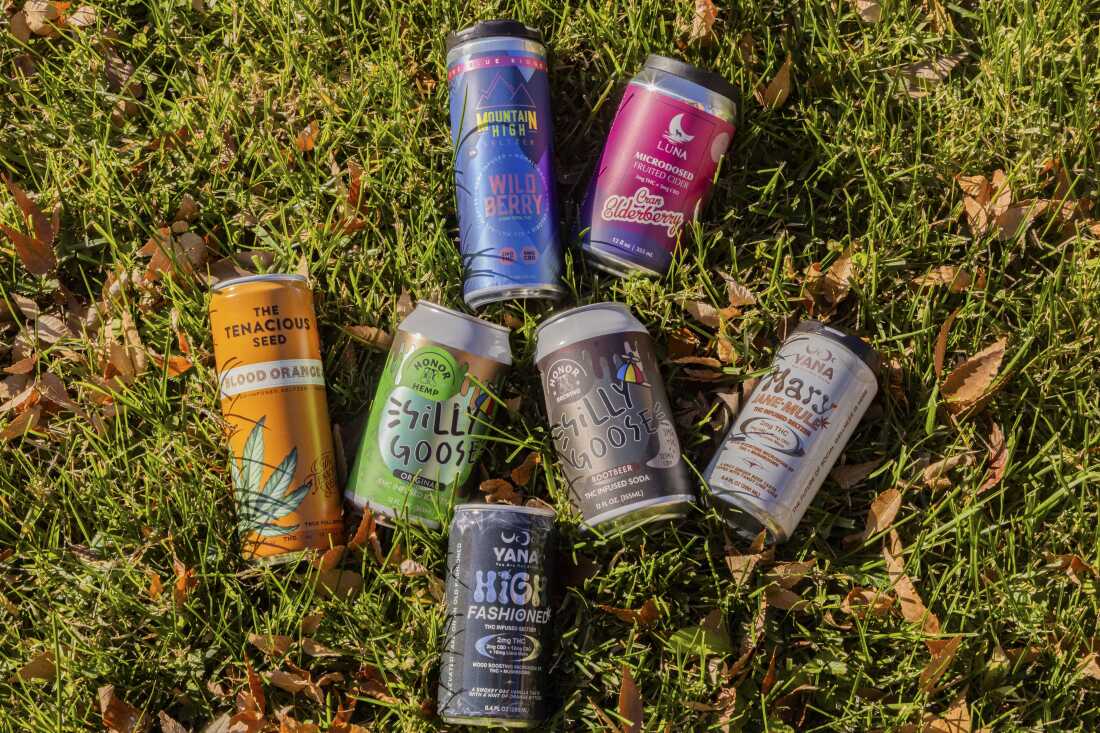

Regulatory warning (April 2026): Federal lawmakers are debating measures that, as currently framed, would sharply restrict hemp and hemp-derived cannabinoids nationwide in 2026—a shift that could unwind large parts of the hemp-derived THC beverage supply chain if it passed in the advertised form. Some senators are pushing amendments that would let individual states opt out of the strictest provisions, and we do not expect the final statute to look exactly like today’s headlines; Capitol Hill horse-trading usually softens the edges. Even so, anyone weighing capital, licensing, or contract manufacturing for this category should treat the situation as extreme caution territory until your counsel can map a defensible path under whatever law actually lands.
Most brewery owners who pick up the phone about THC beverages are not asking for another trends deck. They want a straight answer about what has to be true on the floor before a regulator or a retailer will take them seriously, whether this category forces a capital project, and if money is going out the door, what actually earns it back. This piece is written for that decision, not for background reading. It is also not legal advice: hemp and cannabis rules change by state and sometimes by county, so you need counsel and licensing guidance for your exact footprint before you order emulsion or print labels.
The essentials you have to lock before you talk about equipment
Permits and product definition
Figure out early whether you are operating under hemp-derived THC rules, licensed cannabis manufacturing, or a hybrid your state allows. That single choice drives where you can sell, how you test, and what your insurance carrier will sign. Equipment is secondary if you cannot legally run the SKU you sketched on the whiteboard.
Compliant emulsion source
You are not going to “wing” stable THC in water the way you might trial-hop a saison. Commercial nano-emulsions and turnkey beverage systems exist so that dose, particle size, and compatibility with your water chemistry are someone else’s core competency until you build an R&D lab worthy of taking that in-house. Your job is to hold the supplier to release specs that match your pH, carbonation level, and package.
Packaging proof, not optimism
THC drinks fail in two boring ways that show up after you already shipped: scalping, where cannabinoids bind to the hydrophobic liner inside cans and leave the bulk liquid under-dosed, and oxidation, where oxygen drives degradation toward cannabinol (CBN) and other loss of label potency. SōRSE Technology and other formulation shops describe scalping in plain packaging language; Vertosa and similar suppliers pair liner choice with emulsion design. Your manufacturing plan has to include stability pulls on the exact can, liner, and closure you will sell, not the spare sleeves from your core beer SKU.
Sanitation and segregation
Non-alcoholic THC RTDs do not have ethanol’s antimicrobial cushion. Clean-in-place sequences, allergen or cross-product rules if you alternate beer and THC on shared equipment, and a flush strategy your QA lead can defend should be documented before you chase case volume. Tacky residue on conveyors from some formulations is a known nuisance; food-grade line lube, wipes where your chemical program allows them, and realistic cleaning cadence matter more than a motivational poster about “craft.”
If those four areas are weak, a new machine will not save you. If they are solid, you can answer the equipment question honestly.
Do you need to buy new equipment?
Often no, not to start
A THC or hop-water style beverage is mostly cold-side work: treated water, controlled pH, blending, carbonation, and packaging. You already own the muscle memory and much of the hardware: brite tanks, pumps and hoses, carbonation stone or inline carb, and your canning or bottling line. You are not blocking fermenters for a two-week turn, which is why teams describe the category as closer to RTD or hop-water production than to a second brewhouse.
Indeed Brewing and Keef Brands are a useful reference because they are on the record: in 2023, trade press described Indeed producing Keef’s 10 mg THC sodas in Minnesota under a manufacturing and distribution partnership. That pattern is “use existing plant and logistics, lean on a cannabis brand for formulation equity,” which is the low-capex mental model. You are not proving you can afford a new brewhouse; you are proving you can blend, package, and document under whatever license your state requires.
When you need new or upgraded gear
Staying in the cold room and taproom with short supply chains is different from asking a distributor to warehouse a shelf-stable SKU next to juice. Without alcohol as a preservative, microbial stability and oxygen management become the reasons people write checks for hardware. If your can line cannot hold low dissolved oxygen on a good day, THC is unforgiving because the failure mode is compliance and lawsuits, not just a papery off-flavor.
You can enter without buying a new brewhouse or a second packaging line, especially if you partner for emulsion and brand, or if you pilot on the same cold chain you use for hop water. Plan for capital or upgrades when you move from taproom and local accounts to stable shelf life and broader distribution, because that is where pasteurization and oxygen control stop being optional.
If you spend money, where is the best value?
Think in tiers. The best value is whatever stops a recall or a label failure, not whatever looks impressive on a spec sheet.
Tier 1: Process and measurement before shiny metal
The highest return per dollar is often proving your package with your actual supplier and liner, tightening dissolved oxygen on the line you already own, and paying for stability testing in real time and temperature. A handheld or inline DO strategy you trust, consistent fob or fill practices, and documented CIP beat a new tank if the old problem was oxygen and biofilm. If you do not know your pre-can DO, you do not know your THC shelf life story.
Tier 2: Oxygen and microbiology hardware that matches your scale
If you are serious about low-DO packaging and your current filler is the bottleneck, investments that align with beer quality also help THC: de-aeration of water or base liquid, counter-pressure or slower-fill settings that reduce pickup, nitrogen dosing where appropriate, and capper health so seals are consistent. Those are cross-category wins; you are not buying a THC-only machine, you are buying margin for any RTD or NA project.
Tier 3: Pasteurization for shelf-stable distribution
For products without alcohol, tunnel pasteurization (or another validated kill step agreed with your process authority) is the usual answer when you need ambient or semi-ambient distribution and long dated codes. Vendors quote pasteurization units differently by product pH and package; your target should come from a process authority or validated plan, not from a blog. Capital is serious: used and small-footprint tunnel systems still land in five- and six-figure territory once you include install, utilities, and commissioning, and new equipment scales with throughput. That is why it is a poor first purchase if you have not proven demand and stability with refrigerated runs and a narrow footprint. It is the right purchase when your sales plan assumes convenience stores and warm warehouses.
If pasteurization is not in the budget yet, some teams stay in refrigerated distribution with conservative dating, knowing that choice caps which accounts will carry the SKU. That is a business trade, not a moral one, but you should make it on purpose rather than by accident because a distributor assumed your beverage behaved like beer.
What is usually not the best first buy
A second brewhouse or a dedicated “THC fermenter” you do not need for a non-fermented product. Emulsion manufacturing hardware to make your own nano-particles belongs in the same bucket: strategic for a brand at scale with a full QA team, expensive and risky for a first entry when qualified suppliers exist.
What your team should still understand in one minute
Your tap staff will get customer questions about why a drink feels different from a brownie. Traditional oil-based edibles lean on hepatic metabolism and 11-hydroxy-THC, which StatPearls and other clinical references tie to oral THC pharmacology. Nano-emulsified formulations aim for different absorption kinetics; human studies such as Liu et al. (crossover work on nano-emulsion style delivery versus oil) have reported shorter time-to-peak than traditional oil drops. Train staff to avoid guarantees on onset, and to treat impairment as impairment for driving and machinery.
Hop water as the practical base liquid
If you need a documented chassis, Abstrax and Craft Beer & Brewing publish a 5-gallon bench recipe built around chilled water, about 1.8 g salt at that scale, 5–7 mL advanced hop product, and citric acid to hold pH 3.9–4.2 before flavor. That is the same kind of clear, zero-calorie base many teams use before they add compliant THC and re-test stability. It is not the only path, but it is a published one you can drop into a pilot SOP.
Closing
TailGate Brewery in Tennessee markets TailGate Hemp Company as hemp-derived delta-9 THC sparkling waters with 10 mg THC and 2 mg CBD per can, positioned as an extension of its non-alcoholic sparkling water program, with third-party testing called out on its public pages. That is the shape of a house brand built on beverage capability and compliance, not on buying a new brewhouse first.
Disclaimer: This editorial is for general information only. It is not legal, regulatory, or medical advice. Hemp-derived and cannabis-infused products are regulated differently across states and localities; consult qualified professionals before producing, distributing, or selling these products.
References
Cannabis Equipment News. “Keef Partners with Indeed Brewing to Make Cannabis-Infused Soda in Minnesota.” June 2023. https://www.cannabisequipmentnews.com/manufacturing/news/22864791/keef-partners-with-indeed-brewing-to-make-cannabisinfused-soda-in-minnesota (accessed April 2026).
Abstrax / Craft Beer & Brewing. “Hop Water, Fast and Flexible: A Recipe and Rationale for Every Modern Brewery.” Craft Beer & Brewing Magazine. https://www.beerandbrewing.com/hop-water-fast-and-flexible-a-recipe-and-rationale-for-every-modern-brewery (accessed April 2026).
SōRSE Technology. “The Challenge of Scalping in Infused Beverages (and How to Mitigate It).” https://sorsetech.com/challenge-of-scalping-in-infused-beverages-and-how-to-mitigate-it/ (accessed April 2026).
Vertosa. “Vertosa Emulsions Reduce Potency Loss in Aluminum Cans.” Vertosa blog. https://www.vertosa.com/blog/vertosa-emulsions-reduce-potency-loss-in-aluminum-cans (accessed April 2026).
TailGate Brewery. “TailGate Hemp Company.” TailGate Brewery website. https://www.tailgatebeer.com/tailgate-hemp-company (accessed April 2026).
Ng, Terence; Gupta, Vikas; Keshock, Maureen C. “Tetrahydrocannabinol (THC).” StatPearls [Internet]. Treasure Island (FL): StatPearls Publishing; 2026 Jan. https://www.ncbi.nlm.nih.gov/books/NBK563174/ (accessed April 2026).
Liu, Yue, et al. “Enhancing cannabinoid bioavailability: a crossover study comparing a novel self-nanoemulsifying drug delivery system and a commercial oil-based formulation.” Cannabis and Cannabinoid Research, PubMed Central PMC12166629. https://pmc.ncbi.nlm.nih.gov/articles/PMC12166629/ (accessed April 2026).
Abstrax Hops. “How to Make Hop Water: An Abstrax Brand Guide for the Best Non-Alcoholic Drinks.” https://www.abstraxhops.com/blogs/learn/how-to-make-hop-water-an-abstrax-brand-guide-for-the-best-non-alcoholic-drinks (accessed April 2026).
For related BevWire coverage, see From Grain to Glass: What Happens Inside a Commercial Brewery.