
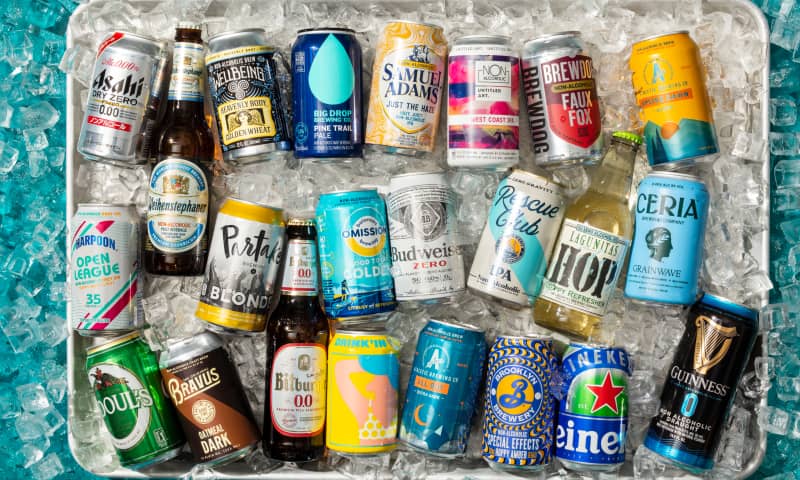

Whether you are running a brewery, building a beverage line, or you just watch the cooler set evolve on weekends, the North American NA and alt shelf is noisy, and the growth is not spread evenly. Gen Z and Millennials are telling surveyors they intend to drink less alcohol, with about two-thirds of Gen Z and a solid majority of Millennials signaling that intent as of 2025, and a large minority of Gen Z describing a move toward abstinence or sober-curious routines—trends a guest overview of the low-ABV and NA shift ties to public-health messaging, wellness, and mindful drinking in parallel. Baby Boomers are also trimming for weight and long-term health reasons, with nearly half in some cohort analyses citing weight loss as a driver. That is a lot of different motivations landing on the same cold box.
The 2025 U.S. Surgeon General advisory that frames alcohol as a leading preventable contributor to cancer risk landed like a second whistle in a game that was already running fast. Ireland has comprehensive health labeling for alcohol products moving into effect in 2026, and Canada and Norway have had their own labeling conversations in the same spirit. You can agree or disagree with how fast regulators should move, but the shelf outcome is the same: more shoppers are reading labels and asking what they can pour at lunch, after a workout, or at a work function without the story getting awkward.
The useful read for anyone trying to grow production or simply understand the grocery aisle is that many consumers treat NA and alt products as additive. They are not always swapping Friday night pints for NA pints; they are adding Tuesday afternoon and Sunday morning occasions where beer used to lose by default. Parent brands that play this honestly tend to see the NA line lift the overall brand without pulling much volume away from regular full-strength beer, because the growth is coming from new moments, not from the same night-out pour.
Non-alcoholic beer is the mature lane, and maturity means paperwork and margin fights
NA beer is still the segment that feels most natural if you already follow beer. The vocabulary is familiar, the industry mostly knows how to keep it cold from the brewery to the store, and most people know how to grab a six-pack. The part that trips people up is terminology. In the United States, alcohol-free sits at the true zero-alcohol end of the conversation, while non-alcoholic generally lives in the under-half-percent band that U.S. labels have used as the everyday definition for years. If you are planning packaging for overseas markets or comparing notes with a UK supplier, remember that their alcohol-free line is drawn much tighter at 0.05% ABV, with dealcoholised covering the same under-half-percent band we use for non-alcoholic in the U.S. Mixing those definitions on a label or in a retailer presentation is how you lose trust in the first five minutes.
| Market | Term on pack | Typical ABV limit |
|---|---|---|
| United States | Alcohol-free | 0.0% ABV (true zero; labeling and approvals still matter) |
| United States | Non-alcoholic | Under 0.5% ABV (the usual U.S. “NA beer” band) |
| United Kingdom | Alcohol-free | Under 0.05% ABV (stricter than the U.S. “alcohol-free” idea many shoppers assume) |
| United Kingdom | Dealcoholised | Under 0.5% ABV (closest cousin to U.S. “non-alcoholic”) |
On the brand side, craft NA keeps growing faster than many adjacent categories, and Athletic Brewing still casts a long shadow in the craft NA set, with public reporting and industry outlets routinely putting its share in the low-fifty-percent range against other craft NA brands. Big-brand NA leans on nationwide distribution: Heineken 0.0 and Bud Zero are not trying to win a taproom argument; they are trying to be in the cooler when someone grabs lunch. Heineken has pointed to strong double-digit growth in recent halves by leaning into occasions that full-strength beer rarely owned anyway.
Hop water is the weird cousin at the family reunion. It smells like beer culture, drinks like seltzer discipline, and prices like craft because the brand story asks for it. The category pitch is simple: zero alcohol, beer-adjacent aroma, and a bridge for people who want something in the glass that does not read as soda. The headache is aluminum. A twenty-five percent tariff shock on cans in April 2025, stacked with Section 301 dynamics, squeezes anyone trying to hold a roughly nine-dollar six-pack against flavored seltzer that can sit at a lower price. That is not a consumer education problem; it is a landed-cost problem, and it is where a disciplined owner or retailer separates a one-off novelty from something people actually buy again.
Spirits and wine are worth watching even if you only brew beer
Non-alcoholic spirits are growing toward the high single digits percent per year, compounded annually through the early 2030s in many forecasts, and the category is splitting the same way beer did. You have botanical, zero-sugar artisan lanes like Seedlip, analog spirits aimed at back-bar mixing like Lyre’s, bite-forward agave substitutes from Ritual, floral South African botanical positioning from Ceder’s, and aperitif brands such as Aecorn that lean on tannin from acorns to fix the mouthfeel hole that plagues a lot of stripped spirits. None of that replaces your malt bill, but it shapes what drinkers expect from complexity and it sets the premium bar for what “good” tastes like without ethanol.
Non-alcoholic wine is a manufacturing story first. Vacuum distillation and spinning cone columns let you work at lower temperatures, sometimes down near seventy-five degrees Fahrenheit, which helps aromas survive the cut, but it can concentrate minerals; treated wines in some studies land roughly fifty-five to fifty-nine percent higher on magnesium, calcium, and potassium than the starting wine. Membrane routes like reverse osmosis, nanofiltration, and dialysis can feel gentler on paper, yet dialysis in particular can shed a huge share of mineral content, which is part of why finished wines read thin. Osmotic distillation trades on a hydrophobic membrane but can run into redox and acetaldehyde issues that show up as sharp green-apple or nutty notes if the production crew is not on top of it. Stabilization afterward is its own discipline, with liquid sulfur dioxide and modern stabilizers such as glycolipid products doing the quiet work. If you are partnering on a beer-wine hybrid idea or a dealcoholized fruit ferment, respect the line between marketing copy and what the cellar can repeat batch to batch.
Three-tier reality and the digital side door
The U.S. three-tier system is still the background story for anything that touches alcohol tax collection and state paperwork. Distributors sit in the middle because that is where taxes are collected and where fifty different state rulebooks get turned into truck routes. Producers fight for attention inside those distributor catalogs because every new product is another name on the same pitch to retailers, and stores worry about local displays, checking IDs, and whether the shelf looks good on a delivery app photo.
That is why selling online is not just jargon here; it is a pressure relief valve. Direct-to-consumer and specialty online marketplaces let a brand prove people come back for a second order before it has to compete for space from a regional distributor. Platforms that are explicitly moving toward alcohol-free assortments, including wellness-oriented retailers that have announced going fully alcohol-free by the end of 2025, are building audiences who treat NA as an add-on, not only a swap. For a smaller NA brand, that is sometimes the only way to build proof before you lean on wholesale relationships that already feel crowded.
The gaps that still look real on a short list
| Opportunity | The gap | Practical takeaway |
|---|---|---|
| Functional and recovery NA beer | Not enough credible “wellness” NA beer next to how sports drinks and better-for-you sets already tell that story. | Benchmarks like Corona Sunbrew 0.0 show vitamin-style claims can win shelf; home workouts, gyms, and game-day are natural homes if labels hold up. |
| Hop water at a fair price | Premium hop water often sits around a nine-dollar six-pack while aluminum tariffs keep costs high next to mass seltzers. | There is room for a believable middle tier with scale behind it, not only a prettier can, before the shelf splits cheap versus trophy craft. |
| NA wine that still feels “full” | Dealcoholization can strip structure, so many reds read thin even when the aroma is fine. | Fixing mouthfeel (including tannin from non-grape sources, as some aperitif brands demonstrate) is where premium NA wine can justify a higher ring. |
| Lunch, office, and commute | Evening drinking still owns the old beer story; midday and workplace occasions are under-served. | Formats that fit those moments add calendar for brands without replacing the night-out pour; big NA beer growth stories already lean on “new occasions.” |
Post-exercise and functional NA beer is undersupplied relative to the storytelling consumers already accept from adjacent categories. The Great Beer Reset walks through how breweries are already testing adaptogens, GABA-forward labels, and other functional adjacencies as volume growth flatlines. Corona Sunbrew 0.0 with a vitamin D narrative is the obvious benchmark on shelves; the argument is that home workouts, gyms, and game-day occasions all want drinks that feel like recovery without leaving the beer aisle. If your team can substantiate claims and your lawyer can live with the label, that is a lane where grocery stores and bars can justify giving you more space.
The hop-water price valley is the mirror image of the functional story. Premium hop water is stuck near a nine-dollar six-pack while tariffs keep the floor from falling. The first brand that can credibly own a middle price level with real scale behind it, not just a prettier can, has room before the shelf splits into cheap seltzer on one end and trophy craft on the other.
NA wine’s mouthfeel gap is a technical prize. Consumers still ask for full-bodied reds even when the alcohol is gone. Tannin reintroduction strategies, including the acorn-tannin approach Aecorn uses in the aperitif space, are hints at where premium NA wine can charge. Anyone making beer-adjacent drinks should care because texture language is crossing categories faster than flavor descriptors.
Office and lunch occasions are the quietest incremental win because they do not replace the night-out drink. Brands that win midday drinking moments, including commute-friendly and workplace-friendly formats, are expanding the calendar for beer companies the same way cold coffee expanded the calendar for roasters. Heineken’s growth narrative around new beer occasions is basically the macro version of that same insight.
What 2026 looks like if you squint at the numbers
North American NA beer is still carrying an aggressive mid-single-digit compound annual growth rate in many outlooks, with NA spirits a point or two higher in the eights depending on whose forecast you believe. Mindful drinking is not a festival tent anymore; it is a regular slice of how grocers lay out the aisle. Fancy small-batch offerings at the top of the price ladder are where North American dollar growth is clustering as the budget end of the market gets tighter. Asia-Pacific remains the fastest-growing large region through the early 2030s for many global models, driven by urbanization and local producers tailoring flavor to local palates at affordable price points, which matters if your company exports ingredients or partners overseas.
On the production side, hybrid dealcoholization that pairs membrane steps with vacuum work is the engineer’s compromise between keeping aroma and managing mineral concentration while holding oxygen pickup down. On the sales side, building proof online before you fight for wholesale shelf space is still the approach that costs less in burned relationships.
The non-alcoholic and alt category is one of the cleaner incremental growth opportunities for a lot of beer and beverage companies because it does not always ask drinkers to choose between loyalty and curiosity. It asks them to add another occasion. For owners, product leads, and anyone picking what to brew or put on the shelf next, the job is to match those occasions to products that can survive tariffs, label rules, and the slow work of getting into stores reliably. Everything else is commentary.
Sources
U.S. Department of Health and Human Services. "U.S. Surgeon General Issues New Advisory on Link Between Alcohol and Cancer Risk." HHS News. January 3, 2025. https://www.hhs.gov/about/news/2025/01/03/us-surgeon-general-issues-new-advisory-link-alcohol-cancer-risk.html (Accessed April 2026).
Government of Ireland, Department of Health. "Ministers for Health bring into law the world’s first comprehensive health labelling of alcohol products." Gov.ie Press Release. May 22, 2023. https://www.gov.ie/en/department-of-health/press-releases/ministers-for-health-bring-into-law-the-worlds-first-comprehensive-health-labelling-of-alcohol-products/ (Accessed April 2026).
Lucas, Amelia. "How Athletic Brewing Co. dominates the booming nonalcoholic beer market." CNBC. March 11, 2024. https://www.cnbc.com/2024/03/11/how-athletic-brewing-co-dominates-booming-nonalcoholic-beer-market.html (Accessed April 2026).
Alcohol and Tobacco Tax and Trade Bureau (TTB). "Malt Beverage Labeling: Alcohol Content." TTB Beer Labeling. https://www.ttb.gov/regulated-commodities/beverage-alcohol/beer/labeling/malt-beverage-alcohol-content (Accessed April 2026).
Heineken N.V. "Heineken N.V. reports 2024 half year results." The HEINEKEN Company Newsroom. July 29, 2024. https://www.theheinekencompany.com/newsroom/heineken-nv-reports-2024-half-year-results/ (Accessed April 2026).